Friday, August 6, 2010

Some thoughts on my tools. Part one: God is in your Ankle.


I was fortunate to grow up with an artist for a father. In addition to being a passionate and talented (yet commercially clue-less) painter and sculptor, my father was also equipped with the super power of being able to build or fix anything, better than a pro. My playground was his fully equipped workshop. The quintessence of the boy's dream of a workshop. A hap-hazard assembly of various tools, trinkets and off cuts. All just waiting to be assembled into a sword, a robot, a dinosaur slaying super rifle. Through my exploration of the realm of assembly, I began to develop an appreciation for a particularly tricky bit of equipment: The Joint.

This nascent awareness manifested itself in the way in which I approached my construction projects. I would build the simple components first, then ponder what mechanisms I would use to bring it all together, to imbue the dis-joint components with the ability to fulfill their purpose.
The simplest join was the one where two components needed to be combined, in some static fashion. Cold glue, elbow brackets and even meters of utility tape could serve the purpose for these. However, as the requirements for degrees of freedom of movement increased, the materials and engineering knowledge required rapidly exceeded the range of my ability.
As a result of these sorties into the world of mechanics, and my interest in the biology of the incredible machines we call our 'bodies', I stand in awe of joints.
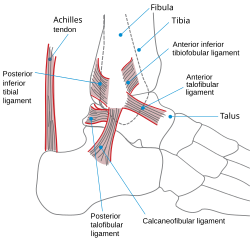
In my opinion, if you want to see proof of a creator, look no further than the bottom of your leg. God is in your ankle.
The ankle is the most incredible piece of bio-mechanical engineering. This particular joint is responsible for translating the vertical contraction of the major muscles in your leg, into a horizontal sprint, a hop, a jump.
As any back-yard engineer knows, this in the most difficult piece of articulated machinery to construct!
I never pay much attention to my ankles (until they ask for it) unless I am purposefully marveling at their functional beauty. Everyday, I am swinging kettlebells, dancing around a punch bag, performing a karate kata. I'm able to do all of this, because my ankles are seamlessly fulfilling their purpose in life.
I think we could all be a little more grateful for our ankles.

Thursday, August 5, 2010

Snazz new watch.

I love watches. If I'm not careful, I could spend all my money on them. As it turns out, I haven't bought a new one in a while.
However, the other day I came across this beauty online, and I just had to have it. A "Swiss Legend Neptune". She's a chunky little creature, but sits oh-so-nicely on my wrist, and at 10ATM water resistant, with a nice bezel mechanism, I can see her accompanying me on a good few dives too.
I must just remember to take it off at kettlebells ths afternoon, I don't think she'll like to get up close to a snatched bell!


Wednesday, July 28, 2010

The Marketing Myth of Supplementation

During my time as a neophyte gym go-er, I was naive and oh-so susceptible to the enticing propaganda of the fitness nutrition industry.
At one point I was probably taking 20 tablets per day, of various vitamins, amino acids, performance enhancers, fat burners and omega oils. In addition to this, I had a plethora of meal replacements and nutritional supplements, which (I was so easily led to believe) were essential for my performance and development, and had to be taken at exactly the right time: Morning, Mid - morning, pre - workout, post - workout, before sleep.
I would scour magazines such as men's health, devouring the articles on "what supplements you should use" and then head off to my local pharmacy and stock up.
I still have the legacy of those purchases - about 12 shake bottles - gathering dust in a cupboard.

These supplements became a mental crutch for me. If I hadn't taken the correct concoction before a straining session, I would spend the rest of the session chewing myself up for forgetting to take my animal pak, or creatine or L - glutamine....
Sure, I was losing weight, and I was getting stronger. I was so afraid, that if I stopped the supplementation all my gains would grind to a juddering halt, and indeed I would retrogress into my former pie - eater self.

Well, through a slow process, backed by hours of thorough objective reading and research, I began to realise that the word "may" crops up almost without exception in the description of the effects of every supplement.
This one 'may' make you stronger. This one 'may' make you thinner.
Let me tell you a bit about the word 'may'.
THe word 'may' is used extensively in the scientific community, when explaining the inconclusive results of a study.
For instance: "Washing your face with soap - free cleanser MAY make you bench press an extra 20kg."
The next part of the description, which is so often omitted from the packagin labels, goes like this:
"or it MAY - NOT have any effect at all - study conducted in conjunction with a balanced diet and good exercise regime"

The only thing that is a definite, is that you will see results if you use in conjunction with a BALANCED DIET AND GOOD EXERCISE REGIME!
Slowly I began to stop using my various supplements. What freedom! I no longer had to lug around an extra bag full of bottles and shakers.
The most surprising result?
I continued to make great gains in strength and losses in fat!
In fact, I believe that some of those supplements were actually taxing my system and indeed a hindrance to performance.

After some thought I have come up with my theory on why the supplements industry continues to flourish:
In this modern day, people are more exposed to the benefits of exercising, being fit and losing weight then ever before.
What is the logical process for these exercise noobs? They go to a gym and meet a bicep pumper.
What does the bicep pumper/personal trainer tell them? "You MUST ABSOLUTELY take this and that and that other supplement because it will make you hard core and ripped"

Why does B-P tell noob this? Because it's what he heard, and maybe he read on a label that it is scientifically proven. So, he has perpetuated the most effective marketing effect (word of bicep) for the supplement industry. In time, noob becomes bicep pumper 2.0 and he too starts becoming an unofficial salesman for the supplement industry. I reckon I did some good business for those guys in my time.

The other reason the supplement industry works, is body building.
Now, bodybuilding is a highly specialised sport. It requires careful planning and periodisation so that the body - builder peaks at exactly the moment of a competition.
This entails a rigorous nutritional supplementation and nutritional regime - including not drinking any water for a day or two before the competition (after having had 10 liters a day for the precedding few days) and also being more strict with diet than an ascetic monk.
In addition to this, bodybuilders take supplements with the goal of achieving peak physical aesthetic form for the one day of the competition. The problem is, post competition, all that excess testosterone brakes down into estrogen. It's a law of nature. All those testo - booster supplements, and estrogen blockers, they only work for a small time period. Bodybuilders utilize this to their advantage in order to appear ripped on the day of competition.
The question is, why does a gym goer noob or bicep pumper need to do the same?
They are surely only training for life, for functional fitness and consistent performance. Have they planned for the estrogen upsurge after taking testo boosters for a month?
The point is, noobs and bicep pumpers alike, see body builders as the pinnacle of the gym - goer ladder of evolution. They want to do what those guys do. So they go and buy.. .supplements.

After having been a slave of the supplement industry for a good deal of time, (I was enchanted, I believed my success was as a result of supplements!) I am now through that dark tunnel. I am free. I'm stronger than ever, achieving results I never though I would ever see, all without taking a single supplement.
104.9kg

Right. So yesterday was weigh in day. I weighed 104.9kg. Not too bad.
I want to see 103.x kg in 2 weeks time..

Thursday, January 28, 2010

Kettlebells changed my life part 1

In a nutshell, kettlebell training has changed the way I live. While kettlebells played a sopmewhat significant role in crossfit style training, I have never experienced such incredible gains in fitness and strength as I have since switching to training with kettlebells and body weight exercises almost exclusively.
It happened almost accidentally. I purchased a pair of kb's, ostensibly to use them at home, to augment my other training. However, when I went to collect them, I decided to stick around for the training session with Trent Murgatroyd (Kettlebells South Africa). It blew me away.
I thought I was fit, I thought I was strong.
Kettlebells schooled me... The intensity and duration of the training session shifted my pradigms, in terms of what I percieved as acceptable levels of exertion, endurance and strength.
I began training with Trent once per week. That quickly escalated into twice and now four times a week. Probably will hit 5 soon too...
Trent's training sessions have significant focus on being strong, and then being strong again and again and again!
I remember pressing a heavy kettlebell on my first day there, and feeling rather pleased with myself. Then Trent said: "So? Is that it? Now do it another 25 times..."
I've certainly come quite a long way in the last 6 months. The other day I trained in a commercial gym with a friend of mine. This is the first time I lifted a barbell in about 4 months.
I was ecstatic to see that not only had I preserved my 'strength' I had actually improved on my ability to execute every rep with perfect form, as a consequence of the improved "strength endurance" I have gained from Trent's kettlebell training methodology.
Bench press was executed with bar touching chect on the negative of every rep. Squats were the image of ideal ass-to-grass, deadlifts my lower back refused to arch, even on the heaviest sets!

To be continued...

Wednesday, January 13, 2010

My life smells like roast coffee beans.

The aroma of coffee percolates through into a significant portion of my day. I enjoy my first cup, black, in the morning with my oats. The next cup at about 10am with my mid morning snack, and a cup later in the day before my workout.
Now, I'm by no means a "coffee snob" (edit - upon rereading this post I decided that I am a snob after all) but I refuse to drink the instant mud that is labelled coffee. My bare minimum is a good cup of filter coffee, made using a french press and a ground that is no more than three months old roasted arabica, preferably from a fair trade farm. My ultimate is a perfect double espresso, drawn from freshly ground beans (must be made no more than 30 seconds after grinding) and using a high quality espresso machine. If I feel like something more substantial then I will add some steamed milk and foam to the mix, for a delicious cappuccino.
Now, other than the obvious benefit of being in luxurious aromatic hot beverage nirvana, I enjoy my coffee for more prosaic and functional reasons too.
Well make that 'reason' instead of 'reasons'. Caffiene. The stuff that puts the Caf in Caffe. Now i'm not entirely averse to sipping on a decaf substitute, even though the process that removes the caffiene does have some negative effects on the flavour of the final roast (imho), BUT my regular choice is caffienated coffee in all its supercharged glory.
The stimulant effects, and side effects of coffee are well known and documented. It's a great idea to have a cup of coffee before your workout. Black with no sugar, It is natures own pre workout drink. Provides you with focus and stimulates your nervous system. One cup of strong black coffee contains about 100mg of caffiene. Synthetic Pre workout drinks can contain up to 200mg. I have found that I cant sleep after using such a product in the evening, I greatly prefer going the coffee route.
Drinking a cup of coffee (Black, No Sugar - spot a trend?) with my 10 am snack also serves dual purpose of curbing my appetite. A cup of coffee with a small snack staves off hunger and makes it a bit easier for me to hold off eating till lunch time. This is particularly helpful on the day after a heavy training session. For example, on the day after a hectic 1000kcal in 1hr kettlebell workout I am absolutely ravenous and it is quite conceivable that I will devour my mid morning snack and be hungry again within minutes. The cup of coffee acts as a discipline bolster!
Recent research has also prompted nutriotionists to recommend varying your warm beverage intake, and get both coffee and tea in your diet. This is due to the high anti-oxidant content of both drinks (reduce cell damage, anti aging, that whole speel). In fact there is a whole litany of health benefits associated with coffee consumption, including reducing asthma attack frequencyand reducing risk of type 2 diabetes (obviously not if you have 5 heaped sugars with your coffee) to name a few.
There are also the nay-sayers who proclaim the negative effects of drinking too much coffee far outweigh the possible benefits. Possible negative side - effects include high blood pressure, hypertension and headaches. These usually only occur as a result of gross over consumption.
As with most things in this information rich time in which we exist, do some resarch for yourself. Decide on what you think to be a suitable level of consumption and enjoy the benefits of this luxurios dark brew.
I myself will stick to my 3 or 4 cups a day strategic regiman!

Thursday, March 12, 2009

Muscles on Muscles

Unfortunately, 99.999% of us humans are not blessed with the genetic abnormality of Myostatin deficiency, like those lucky beasts, the Belgium Blue cattle.
Myostatin is a growth factor which inhibits muscular hypertrophy (or growth) and there is nothing any of us can do about the levels of myostatin in our body. It's down to pure genetics.

What we CAN do is decide on a training methodology to ensure we maximise muscular hypertrophy to the greatest possible extent.
When we exercise our muscles grow. This growth is a result in an increase in the size of the cells of the muscle, NOT as a result of growing more muscle cells (muscular hyperplasia).

The first thing that happens when someone, who has not been active, begins to exercise, is a Neural Response. This is an increase in the neural drive which results in muscle contraction. After just a couple days of training, a previously inactive individual can see noticeable gains in strength just from "learning" to use the muscle.

After a couple of months of training hypertrophy will kick in and muscle growth will occur. Hopefully it's the right type of muscle growth.

In my opinion, you are after myofibrilated hypertrophy - which means you have gained muscle size due to increase in thickness of muscle cell walls, rather then sacroplasmic hypertrophy, which is increase in muscle size due to an increase in volume of cell sarcoplasm (or the fluid which fills the cells)

Myofibrilar hypertrophy is attained by lower rep, lower duration, higher intensity exercise, and is characterised by muscular growth such as sprinters, olympic weightlifters, powerlifters and strength athletes.
Sarcoplasmic hypertrophy is as a result of high rep, lower intensity longer duration exercise and results in muscular hypertrophy characteristic in professional body builders and endurance athletes.

In my opinion, Sarcoplasmic hypertrohy is a waste of time and effort. What's the use of a huge bicep if you cant do one pull up?

How to use this information:
Train to get strong and fit. Not to have a six pack and tiny waist. Lift heavy and hard. Dont waste your time on low effect cardio. Train for conditioning